
Newsletter Article

Air doors — also known as air curtains — produce high-velocity "curtains" of air that acts as invisible barriers, preventing the flow of air. They are used for loading docks in manufacturing plants and warehouses, as well as a variety of commercial facilities. Air doors help save energy while controlling dust and other contaminants.
What are the savings? Depending on the application, air doors typically have a heat-loss recovery rate of 70%.
Benefits of air doors
Air doors bring a number of benefits to the right application:
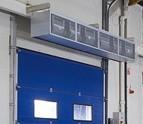
- Energy savings. Air doors save energy by keeping heated or cooled air in while keeping unconditioned air out; they typically pay for themselves in less than two years.
- Open access. Strip curtains and other door devices can obstruct views and partially impede workers and materials as they pass through; air doors provide clear, unhindered access.
- Dust control. Air doors help prevent dust and insects from passing through door openings.
- Light source. Invisible air doors let light shine through, providing an opportunity to reduce energy costs by taking advantage of free daylighting.
- Contaminant control. Air doors can prevent the migration of odors or contaminants from one area of a facility to another, such as between the shop floor and an office space.
Design and installation
Air doors are often located above the entrance, but they can also be mounted vertically on the sides. Selecting and installing the right air door depends on a number of factors: your primary need (temperature or dust control), door location (interior or exterior), door size, and space-conditioning requirements. Other considerations include:
- Air stream coverage. Be sure the air stream covers the full height or width of the opening.
- Air stream strength. The force of the air stream must be sufficient to provide an effective barrier.
- Heating options. Fuel alternatives for air doors include electricity, gas, steam, and hot water.
- Entrance and exit rates. Air doors are most effective in openings that have heavy traffic. For freezer doors or loading docks that get little use, strip curtains may be a cheaper alternative.
- Standards. A number of standards regulate air door design and installation. Commonly used standards include ANSI/AMCA 220 Laboratory Methods of Testing Air Curtains for Aerodynamic Performance Ratings and NSF/ANSI 37: Air Curtains for Entranceways in Food and Food Service Establishments.
Air doors in action
A cabinet manufacturer installed steam-heated air curtains to help stabilize building temperatures, preventing laminating finishes from cracking and increasing productivity. An automotive coating facility uses five air curtains along a 20-foot hallway to remove contaminants from workers as they pass through. Air curtains save money and improve the safety and comfort of employees while increasing energy efficiency. Take a look around your facility; is there an area where an air curtain would be beneficial?
July 2026 Empowering Small Business
LADWP's monthly Empowering Small Business Newsletter helps inform industry-specific small business customers about LADWP news, conservation programs and ways to save on their bill.
Full Newsletter